

Perimenopause and menopause is usually discussed in terms of changing menstrual cycles, hot flushes, sleep disruption and mood changes. But there is another important aspect of this transition that deserves more attention: the changes taking place in cardiovascular and metabolic health.
Emerging research suggests that the years around the final menstrual period are a time of accelerated change in cholesterol levels, insulin sensitivity, body composition and vascular function. Some of these changes appear to occur more rapidly than would be expected from ageing alone.
A recent review published in the journal Climacteric brings together evidence that these cardiometabolic changes may also be connected to menopausal symptoms, particularly vasomotor symptoms and sleep disturbance. The authors suggest that perimenopause may represent an important opportunity to identify and address cardiovascular risk earlier in a woman’s life.
The menopause transition is associated with several changes that can influence long-term cardiovascular health.
Lipid levels
Data from the Study of Women’s Health Across the Nation (SWAN) found that LDL cholesterol increased by approximately 5.2 mg/dL per year in the 12 months surrounding the final menstrual period. This was greater than would be expected from chronological ageing alone.
HDL cholesterol, often referred to as ‘good’ cholesterol, can also increase during the transition. However, the story is more complicated than the numbers suggest. Emerging evidence indicates that HDL particle size, composition and function may deteriorate. This means that a higher HDL cholesterol result does not necessarily indicate that cardiovascular protection is being maintained.
Body composition changes, even when weight does not
One of the body changes women get bothered by is a change in shape and body composition despite eating and exercising the same. This can happen even when overall body weight remains stable.
The increase in fat is particularly noticeable around the abdomen, including metabolically active visceral fat that surrounds the internal organs. Visceral fat is associated with insulin resistance, inflammation and other metabolic risk factors.
This helps explain why changes in metabolic health can occur without a substantial change on the bathroom scales.
Insulin sensitivity and vascular function
The prevalence and severity of metabolic syndrome increase across perimenopause, with central obesity a particularly common feature. Insulin resistance may also become more prominent.
Changes in vascular function are another part of the picture. Studies have found declining endothelial function and increasing arterial stiffness across the menopause transition. These functional changes may precede more gradual structural changes in the arteries.
Taken together, these findings suggest that perimenopause is a period when several cardiovascular risk factors can begin to move in an unfavourable direction.
Menopausal symptoms may be connected to cardiovascular health
One of the more interesting aspects of the new review is its examination of the relationship between menopausal symptoms and cardiometabolic health.
Vasomotor symptoms (VMS), including hot flushes and night sweats, affect up to 80% of women. They often become most frequent or severe around the final menstrual period. Sleep disturbance is also common, affecting an estimated 40–45% of women during perimenopause.
A growing body of observational research has found associations between these symptoms and cardiovascular risk.
For example:
- Women with severe vasomotor symptoms had more than twice the risk of cardiovascular events in pooled prospective analyses.
- Persistent insomnia symptoms were associated with a 71% higher risk of incident cardiovascular disease in one longitudinal study.
- Women with poorer cardiovascular health before menopause were more likely to develop moderate-to-severe vasomotor symptoms during the transition.
These findings do not mean that hot flushes or poor sleep cause cardiovascular disease. Nor do they establish that treating these symptoms with hormones or other non-hormonal methods will prevent future cardiovascular events.
Instead, they raise the possibility that symptoms and cardiometabolic changes may be connected through shared biological pathways, including the autonomic nervous system, inflammation and stress-response systems.
The relationship may also work in both directions: metabolic health could influence symptom development and severity, while symptom burden may be associated with processes that affect cardiovascular health.
This is an important area for further research.
Protect your cardiovascular health
The encouraging message is that many of the factors influencing cardiovascular health are modifiable. Perimenopause provides an opportunity to take stock of health, identify emerging risk factors and establish habits that support long-term wellbeing.
1. Review your risk factors
Do not assume that previously normal results will remain unchanged through midlife. Blood pressure, cholesterol, blood glucose and other relevant risk factors warrant annual review review.
A family history of cardiovascular disease, smoking, diabetes, high blood pressure and existing metabolic conditions should also be considered when assessing overall risk.
2. Prioritise strength and aerobic exercise
Maintaining muscle mass becomes increasingly important as women move through midlife. Resistance training helps support muscle strength and function, while aerobic activity contributes to cardiovascular fitness and metabolic health.
A combination of both is a valuable approach. Regular movement throughout the day also matters.
3. Pay attention to nutrition and body composition
A balanced dietary pattern, rich in vegetables, fruit, legumes, wholegrains, nuts and appropriate sources of protein, supports metabolic health.
The aim should not simply be weight loss. Maintaining muscle while limiting excess visceral fat is an important part of healthy ageing.
4. Take sleep seriously
Persistent sleep disturbance deserves attention in its own right. Night sweats and hot flushes can disrupt sleep, but other factors, including insomnia and sleep apnoea, may also contribute.
Addressing the cause of poor sleep is important for quality of life and may have wider health benefits.
5. Seek help for troublesome menopausal symptoms
Women should not feel they need to tolerate severe vasomotor symptoms or disrupted sleep. Effective hormonal and non-hormonal treatments are available, and treatment decisions should take account of individual health history and risk factors.
Where does menopausal hormone therapy fit?
Menopausal hormone therapy (MHT) remains the most effective treatment for vasomotor symptoms. For appropriately selected women, it can provide substantial relief from hot flushes and night sweats and improve sleep when symptoms are contributing to disruption.
However, MHT is not recommended as a treatment for the primary prevention of cardiovascular disease (unless you have gone through an early menopause or have premature ovarian failure).
The cardiovascular effects of MHT depend on factors including age, time since menopause, baseline cardiovascular risk, formulation and route of administration. Transdermal oestrogen has a more favourable hepatic and coagulation profile than oral oestrogen, although important questions remain about any benefit in cardiovascular outcomes.
MHT decisions should, as always, be individualised, with symptom management considered alongside a woman’s overall health and cardiovascular risk profile.
An opportunity for earlier prevention
The emerging evidence suggests that perimenopause is more than a reproductive transition. It is also a period of important metabolic and vascular change.
We still need better research to establish whether the relationships between menopausal symptoms and cardiovascular health are causal, and whether treating symptoms or improving metabolic health during this stage can alter long-term cardiovascular outcomes.
Don’t wait for all the answers before paying attention to cardiovascular health in midlife.
Monitoring blood pressure, lipids and glucose, maintaining muscle mass, staying physically active, eating well and addressing sleep and menopausal symptoms are all worthwhile steps.
Use the menopause transition as a prompt to look beyond symptoms and the hormones, and take a more proactive approach to long-term health.
Reference
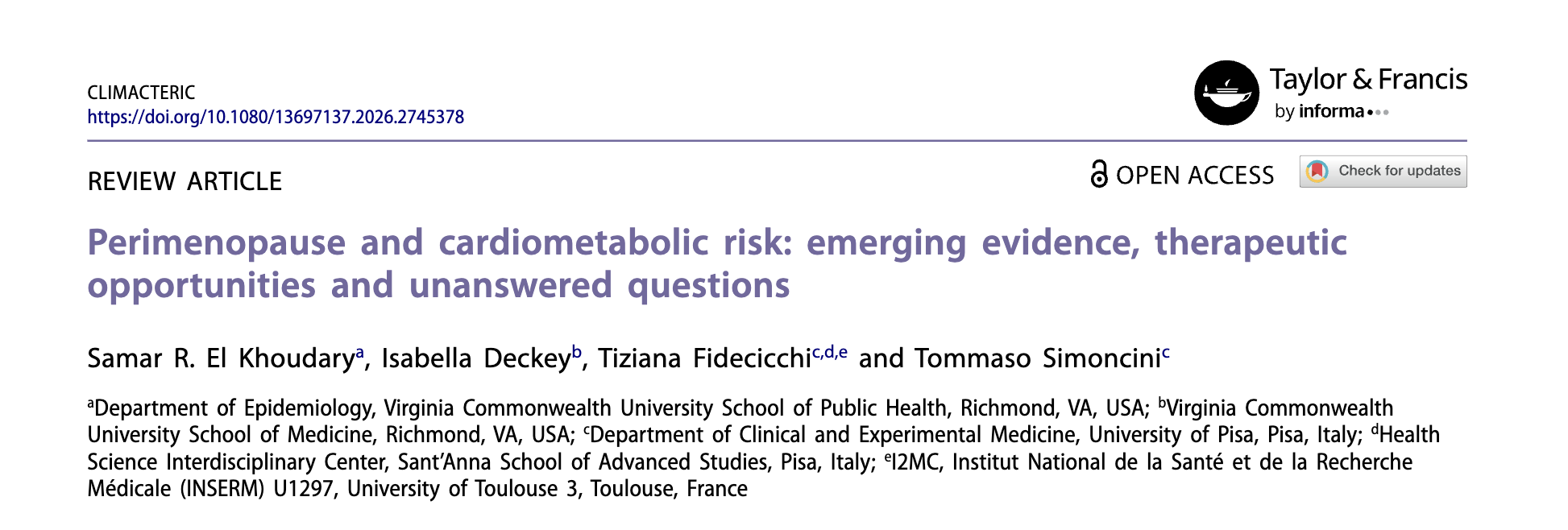
El Khoudary SR, Deckey I, Fidecicchi T, Simoncini T. Perimenopause and cardiometabolic risk: emerging evidence, therapeutic opportunities and unanswered questions. Climacteric. 2 November 2026, free access.
This information is for general educational purposes only and does not constitute medical advice. Please see your health professional for advice that is personalised to you.
Key Take Aways
The menopause transition is associated with increased risk of cardiometabolic disease
Those with worse flushes and sleep problems have greater risk – the reasons for this link are unknown
Monitor and manage all your risk factors
Other resources